Sunday, November 20, 2011

The Serenity series

THE SERENITY SERIES
by Holger Nathrath and Bjorn Hermans

as featured in Super Serials

SerenityEternityInfinity
ArachnaTrydentSER3LV11
STRAIN

Holger Nathrath, alongside best buddy and playtester Bjorn Hermans, stand together as two of the most loved '94-'95 PWAD developers, rivaling only Dennis and Thomas Moeller. Their Serenity trilogy spans three episodes for the original Doom and three titles' worth of abstract concepts ending in -ity, but only two years, with Serenity and Eternity seeing release in '94 and Infinity in 1995. And there would have been more! Nathrath and Hermans had two Doom II projects in the pipeline, one a conversion of all the existing Serenity levels to Doom II (perhaps with some more?) and the other an original Doom II megaWAD. We only have scraps available of the latter, namely Bjorn Hermans' own Trydent and Nathrath levels that were donated to other projects, most notably STRAIN with others shopped around to other ambitious projects that never saw release (like the Eternity TC - no official relation).

STRAIN (STRAIN.WAD)


STRAIN is a 32-map partial conversion created by the Alpha Dog Alliance, a loose confederation of Doom enthusiasts, many of them fairly prolific in the community at the time. While some I recognize from their individual works, others are familiar contributors to the community WADs of the past (MM and MMII) and then present (Requiem). STRAIN was in production for quite some time; Patterson (the project director) spoke of work stalling while a number of 1996 high-profile WADs were released (some of their authors also contributing to STRAIN!). Fortunately, STRAIN saw a release, and though it has a few very short levels and some donations (from the cancelled Serenity IV project and Dystopia 3), it would still be worth your attention if half the WAD went missing.

Wednesday, November 16, 2011

CHORD_NG (CHORD_NG.WAD)

CHORD_NG
by Malcolm Sailor


CHORD_NG (previously referred to as CHORD: The Next Generation) is one of a few levels in Malcolm Sailor's CHORD series, the maps of which he claims are the only good ones he's ever made. If that's the case, then I gather that Sailor prizes very hard and very fast gameplay, because that's what CHORD_NG (replacing MAP28 of Doom II) is all about, playing something like a Hell Revealed map on a much smaller scale. There's no story, just you and some Hellish battlements isolated in a sea of lava. Alignment, lighting and all that jazz is impeccable. Sailor emphasizes his tower theme by surrounding the main island with four smaller structures in the distance to place the map outside of a void. Enough about the visuals, though.

Sunday, November 13, 2011

The Talosian Incident (TALOSIAN.WAD)


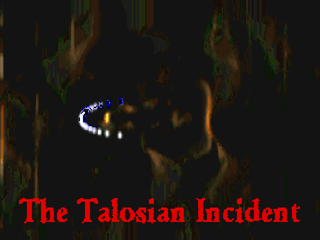
The Talosian Incident is a 20-map megaWAD for Doom II by Black Star Coven, an organization consisting of a number of Doom authors who intended this to be their farewell to the Doom community, in search of browner pastures. From what I can tell, it was supposed to be longer (probably the full 32 maps) but, well, here we are! Most of the maps are courtesy of John "Gestalt666" Bye and Malcolm Sailor (eight and nine, respectively) with a few other authors contributing one map each (including a collaboration with Ola Bjorling), and almost all of the new, atmospheric music by Bye. As an interesting sidenote, few of these authors would actually end their Doom mapping careers with this release.

Wednesday, November 9, 2011

Hell's Eventide (EVENTIDE.WAD)

HELL'S EVENTIDE
by Marty Ihlen, Travers Dunne and Rick Clark


Hell's Eventide is a product of tag-team mapping between Marty Ihlen, Travers Dunne and Rick Clark. The tremendous trio passed the WAD from member to member after modifying it, creating a medium-size map for Doom II with its own particular Hellish style. The story is a little muddled but the protagonist appears to have witnessed the downfall of his father's kingdom to the forces of evil, brought on by a jealous subject, an adviser named Hilsgarde. The result rended time and space in such a way that future, past and present commingled, resulting in a twisted, broken world. The narrator thus resolves to fulfill his father's dying wish, now that he's older, and slay the source of evil, thus returning things to their proper place.

Sunday, November 6, 2011

Eternal Doom (ETERNAL.WAD)


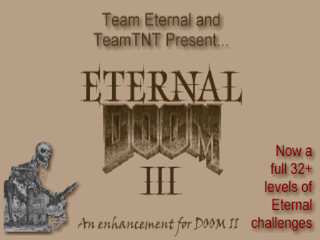
Eternal Doom began life as a 12-map episode for Doom II, produced by Team Eternal and under the direction of Paul Schmitz, the author of Artifact and Welcome to Hell. A number of WAD authors cleaved unto him, including Sverre Kvernmo, who is responsible for many of the new graphics (that is, the stuff not ripped from Heretic and Hexen). Eternal Doom was updated two more times, adding fifteen and six levels, respectively, to turn it into a mega-megaWAD. I know this project eventually came under the purview of Team TNT, but I have no idea when that happened. I'm guessing some time during the development of Eternal Doom II, but I have no basis for that assumption. For sure, Eternal Doom III was headed by TNT, given Ty Halderman's involvement.

Tuesday, November 1, 2011

ESW2 (ESW2.WAD)


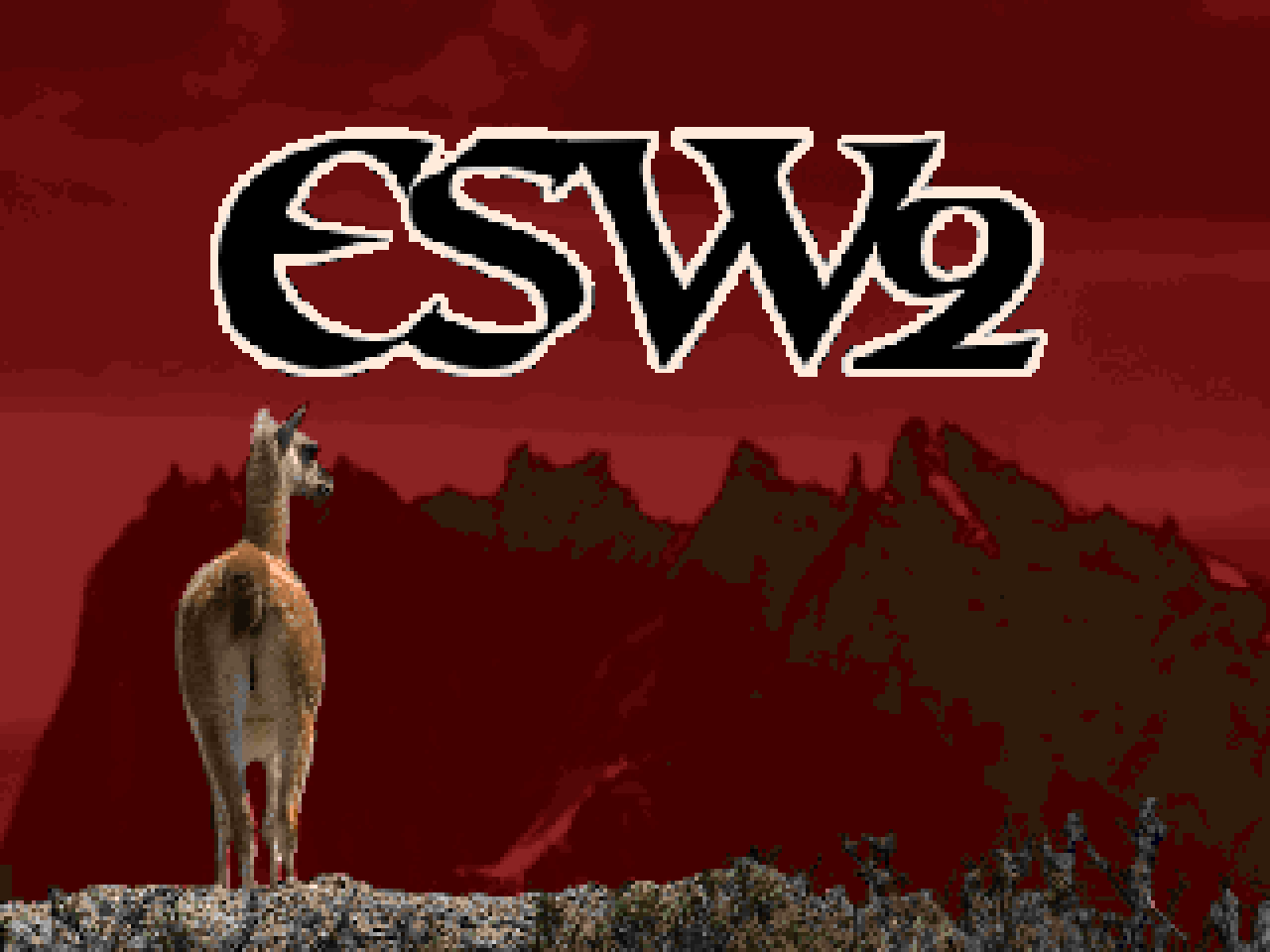
Doom's appeal has always had an international flair, and while it was tougher to suss out during the early years there's a decent chance of finding Doomers who speak your own language. The Russian community is the largest such example that I can think of, but other more tightly-knit groups include French, Czech, and Japanese. The producers of ESW2, if the names and email address are any indication, hail from the South American country of Chile. The 10-level Doom II PWAD, released in 1995, takes its title from the handle of the main contributor - David Jander aka ESW - who made seven of the included maps. I suppose that the other three authors for the other three maps are his friends.

Saturday, October 29, 2011

Welcome to Hell (WELHELL.WAD)

Paul Schmitz created Artifact, one of Doomworld’s picks for the top 10 WADs of 1995. He also contributed some maps to Eternal Doom, very much in keeping with his mapping style. Welcome to Hell, his lesser-known followup to his premiere trilogy, is something in a bit of a different direction, finished near the end of '95 but released in early '96. It’s not exactly one large map cut up into three linked adventures. Each of the levels is fairly small and / or short compared to the offerings of Artifact. Schmitz has refined his map making sensibilities, however, creating a number of challenges with a unique aesthetic sense.